My History
Barbara Hayden
AUTHOR, SCRIPT WRITER,ACTOR
Born in Seattle, Washington, Pat Silver-Lasky studied in the Theatre departments of the University of Washington, Stanford and subsequently attended the prestigious Reed College, Portland where she directed their first play. She began her career as an actress in Shakespearean theatre and then went to Hollywood where she worked in TV and film under the name Barbara Hayden.

Reviewed By Grace Cavalieri, Poet Laureate of Maryland,
and host of the Library of Congress radio show: The Poet and the Poem
and host of the Library of Congress radio show: The Poet and the Poem
“Luscious is the word for this swashbuckling historical novel. John Law is a perfect combination of a fast-moving action-adventure upheld with solid historical facts. I’m an 18th-century enthusiast, an author, yet this information about economist John Law is astonishingly new. The book’s author is a consummately skilled writer with character-driven situations that become plots. She’s chosen a little-known figure who developed the first bank in France, going on to initiate paper money in exchange for gold nuggets, and further, to sell shares in the “Mississippi project” in the new world. That is the core of this novel, but that’s hardly its flair. The energy on the page comes from a vivid sense of place and decor with exquisite detail. We can feel the rustle of taffeta, the shine of diamonds, and the swerve of velvet in scene after scene. . . . with the weight of history lifted to an unforeseen buoyance. It’s impossible to stop reading because of the psychological action as well as physical movement. This book contributes to readers not only for sheer unending pleasure but an honest look at the rise and fall of currency in the first quarter of the 18th century. It’s an unusual combination of authenticity and drama; and will appeal to students of history and the general population.”
REVIEW by Dr. Richard Niles
One of the most fascinating, influential, and little-known individuals in history, the 18th century John Law’s unbelievable story has at last been brought to life in a biographical novel which is nothing short of breath-catching drama. Born in 1671 into a Scottish family of Church clerics and goldsmiths (the only persons allowed to lend money in Scotland), this exceptionally handsome and clever young man grew up to display little of Church morals. But he knew how to make vast amounts of money and how to use that to make more.
Taking full advantage of the many intrigues in John Law’s life, both sexual and monetary, author Pat Silver-Lasky vividly recreates the opulent world of the French Regency’s absorbing, wicked ways. She writes with clarity and style, embellishing notoriously complex topics in a clear and gripping fashion. Pat has written books, plays, and many detective series for television, displaying her nose for research in her biographies for the BBC of Christopher Columbus, Henry Morton Stanley, Alfred Nobel and Ernest Hemingway.
Law tried to sell England and then half of Europe on creating the world’s first National Bank. In France the Duke of Orleans watched Law win at the gaming tables and bought his banking ideas – and then his idea of paper money – a concept that changed the world’s economy forever. His amazing talents command an important chapter in the development of Western capitalism – stabilizing the value of money, banking, markets, and financial institutions.
But that was just the start. Law’s introduction of the “Mississippi scheme,” a wild exercise in capital procurement and share offering, spawned the greatest bull market in history. Its drastic crash, brought on by his enemies, make this book fascinating reading for anyone playing the markets today. The original ‘Wolf of Wall Street’, John Law said of his own achievements “I changed the world more than Christopher Columbus and his discovery of the Indies.” Pat Silver-Lasky has delivered a sensual book about a man obsessed by money and love, and vividly brought to life one of the most interesting and influential individuals in history – John Law.
REVIEW: by Lisa Hayden Miller, author
Duels, dark villains, and danger mix with love, corruption, and betrayal in this rich historical biography. While this book meets all academic standards in every university library, its virtues are even more remarkable. The author agitates the conflicts and power plays of the French Court at the turn of the 18th century – unveiling this electrifying account of a little known but vastly important man in the history of our modern world, John Law, a Scotsman with a head for figures and a heart for romance.
REVIEW: by Warner Glassford CTO
JOHN LAW – MONEY TO BURN … This remarkable story has at last been brought to life in a biographical novel by Pat Silver-Lasky. It’s a must-read today for anyone who wonders about modern-day Bitcoin. John Law’s18th century invention of paper money in France made me understand how a decentralized digital currency like Bitcoin without a central bank or a single administrator can still have solid worth. Value is partly in the perception, a concept which applies to the Bitcoin phenomenon.
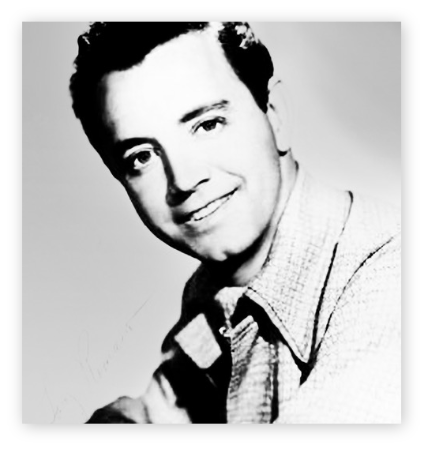
1946
I married the singer, guitarist, composer Tony Romano who introduced me to a world o entertainers and entertaining.
We had a daughter, Lisa (Hayden Miller), ex-restaurateur, designer, author of Galley Guru (LISA) and a son, composer, arranger, guitarist, producer and author Dr. Richard Niles whose latest jazz album, Bandzilla Rises!!! highlights some fantastic international talent.
(see Richard Niles’ website www.richardniles.com and Lisa’s Photomagic Designs)
1948
Barbara Hayden produced, wrote, directed, and acted in 18 episodes of the first live TV drama series from Hollywood, Mabel’s Fables for KTLA (Paramount Pictures) It received an Emmy nomination.
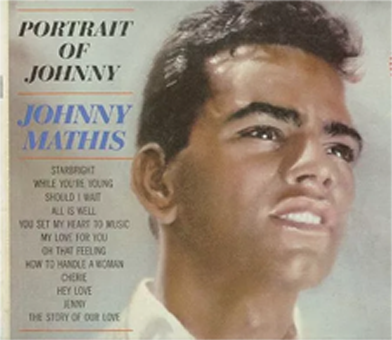
An ASCAP lyric writer, Barbara Hayden and Tony Romano wrote 14 songs including While You’re Young for Johnny Mathis’ album, Portrait of Johnny.
During that period my credits as actress:
• The Loves of Carmen (1948) (uncredited) – Woman on Stagecoach
• A Perilous Journey (1953) – Cathy
• Roman Holiday (Matinee Theatre)1958 Live TV, a lead role.
• Have Gun––Will Travel – The Man Who Lost (1959): Mrs. Bryson,
(directed by Ida Lupino.)
• Rescue 8, episode “Find That Bomb!” (1958) – lead: Kit Shocky
• The Crimson Kimono (1959) film- Mother
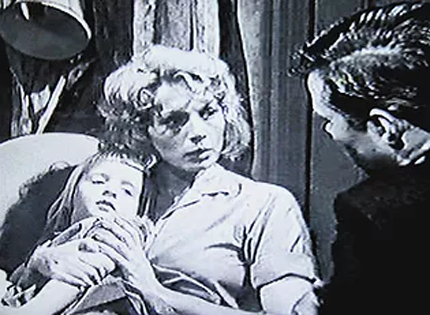
clips from: Roman Holiday
The New York journalist Helen Rowland once wrote that when two people decide to divorce, it isn’t a sign they don’t understand each other; rather that they finally do. Our nest had fallen out of the tree and after twelve years Tony and I were divorced.
Producer of the series was Jesse Lasky Jr., son of the film pioneer Jesse L. Lasky, whose company, The Jesse Lasky Feature Play Company, produced the first full-length motion picture in Hollywood, The Squaw Man in 1913 and founded Paramount Pictures, Jesse Jr. had written 8 films for Cecil B. DeMille. He had received the Box Office Award twice, for The Ten Commandments & Samson And Delilah which are among the Top Ten Box-Office All-Time Hits. He was to write a total of 48 films, six of them with me.
The scripts were approved and Jesse and I began writing together. Together we were to write 119 TV episodes and mini-series including Avengers, Danger Man/ Secret Agent. Our verse play Ghost Town won several awards in the US. We moved to London in 1962 and stayed.
I now have dual citizenship.
Jesse and I were head writers and show runners on the TV series, Philip Marlowe, Private Eye. In 1984 and 1986 it won three awards in the USA and in the Netherlands. I wrote four books with Jesse: Men of Mystery, Dark Dimensions, Love Scene (the story of Laurence Olivier and Vivien Leigh), and the American best seller historical novel, The Offer, 6 films, the award winning Explorers series in the UK (Ten Who Dared in the United States).
After a bank had rejected two scripts from four other writers, we accepted an assignment from a producer to write a script in nine days and win bank approval. With the help of two secretaries and four typewriters (in those pre-computer days), our nine day script for Crime and Passion got bank approval. Yes!!! Filming with stars Omar Sharif and Karen Black began in Zürs, Switzerland. We were flown there to do rewrites and ‘have a vacation’. Neither of us skied and both hated mountains of snow.
Director Ivan Passer, living his own take on ‘genius’, would not allow the stars to read the script. Each day he outlined the plot and asked them to ‘improvise’. He never knew that Karen and Omar secretly came to our room at night to study the scenes for next day.
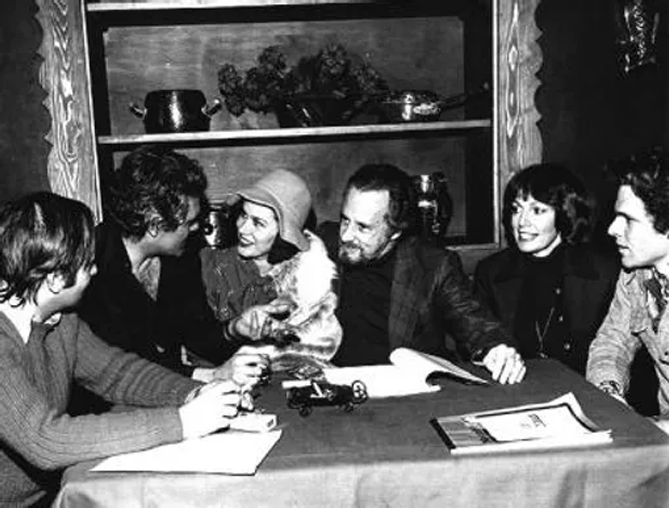
Ivan Passer, Omar Sharif, Karen Black, Jesse Lasky Jr, me, Joseph Bottoms
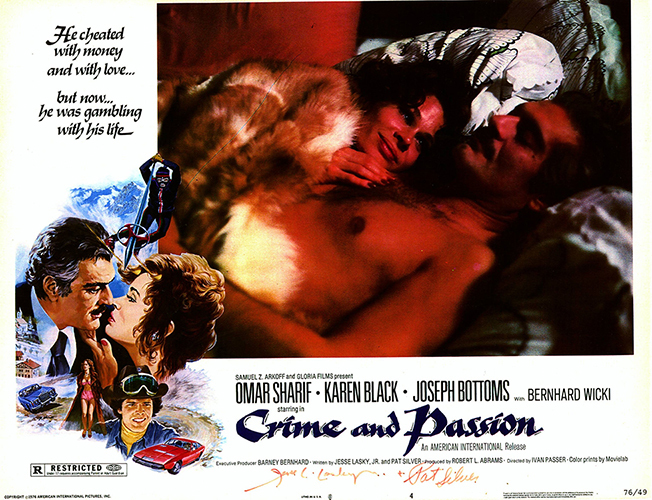
1987
we wrote the play Vivien based on our book, Love Scene. I directed its highly acclaimed first production at the Melrose Theatre, Los Angeles (1987) and also the London Rehearsed Reading of Vivien in 1992.
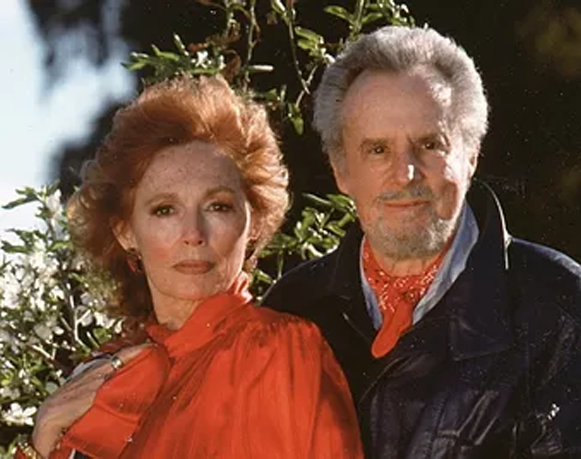
Jesse and I had a farmhouse in Spain for 12 years. Below is a picture of us in our orchard. Jesse died in 1988.I taught Screenwriting at the London Film School for 9 years. Based on this teaching, my first solo book, Screenwriting For the 21st Century was published by Batsford (Chrysalis) Books in August 2003.
1995
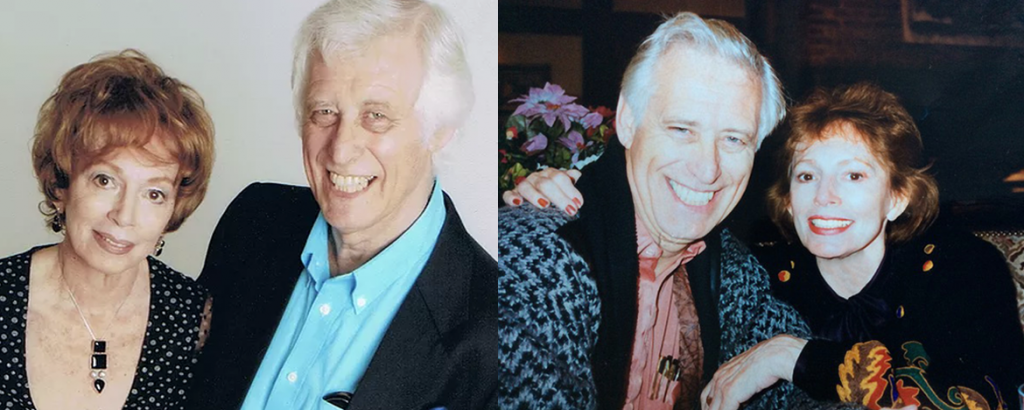
I met British cartoonist Peter Betts, known as Peeby. We were married in 1997, living in London. We decided to move to Orange County, California in 2009, which we had been visiting several times to see my daughter. Now Peter’s family come to visit us.
I continue to write and the books I’ve produced are available through this site from the “Order Books” page on this site.
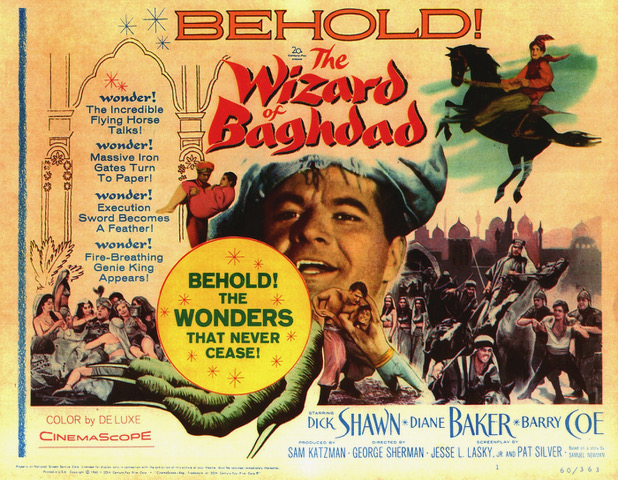
This is a photo of Jesse and me in our office at 20th Century Fox, where we wrote 3 films: The Pirates of Tortuga, Seven Women from Hell, and Wizard of Baghdad. . (See Feature Films on Books Films and TV)
Behind us are four photos from the first two films. We are busy writing the third film. Wizard of Baghdad starred Dick Shawn and Diane Baker. Dick was a sparkling comedian, and a fine actor. {See The Producers) A few months after Wizard opened to good reviews, Dick came to the Melrose Theatre in Hollywood to see a play of ours, (‘Love Scene’ – about Laurence Olivier and Vivien Leigh, I’d also directed.) Dick was about to begin his stage act in a Pasadena theatre.
A few days later he dropped dead on stage. The audience thought it was part of his act, and laughed, waiting for him to get up. Seeing that something was wrong, a stage hand went out on stage, realized what had happened and sent the audience out.